
AcademiaJung was founded in 2013 out of the need to support
doctoral and postgraduate students in Analytical Psychology, in collaboration
with international universities.
In the absence of academic support structures in this field in
Portugal, this independent initiative was created to address that gap.
Since then, the Academy has evolved into a broader project,
integrating:
• specialized training
• pedagogical and clinical supervision
• interdisciplinary collaboration in the fields of
Analytical Psychology, Clinical Psychology, and Health Psychology
Note: It is important to emphasize that this Academy is an
independent initiative and has no affiliation with the International
Association for Analytical Psychology.
We offer the first training program in Analytical Psychology accredited in Portugal (2018) by the Portuguese Psychologists’ Association (OPP): “Promotion, Prevention and Intervention in Mental Health: An Analytical Psychology Perspective”(Action code: 231.1). This program grants 60 credits within the specialization area of Clinical and Health Psychology.

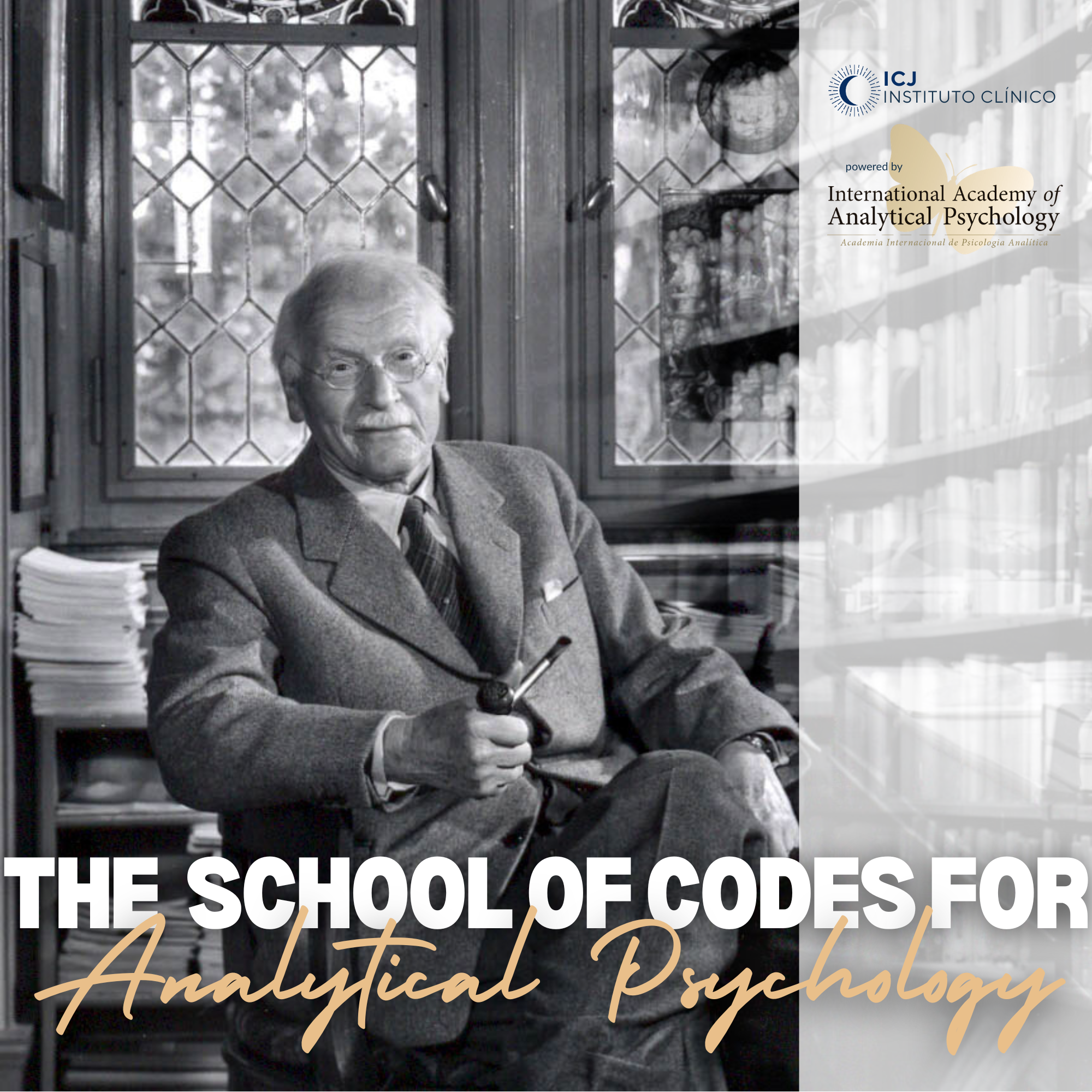
Our theoretical approach distinguishes itself
from the three classical schools of Analytical Psychology — the Classical (or
Zurich), the Developmental (influenced by psychoanalysis and attachment
theory), and the Archetypal (associated with James Hillman) — by proposing a
fourth path: the “School of Codes.”
This perspective integrates Jung’s legacy with contemporary advances in
the life and mind sciences. In particular, it takes as its structural axis Code
Biology (www.codebiology.net), an emerging scientific field founded by the embryologist Marcello
Barbieri (www.marcellobarbieri.website), which investigates the biological, neural, and cultural codes that
organize vital and symbolic processes.
Within this framework, our approach engages with
and extends the rich tradition initiated by Anthony Stevens and further
developed, among others, by John Ryan Haule and Erik Goodwyn, to which we also
seek to contribute.
As examples of the work emerging from our School,
as well as of the growing influence of this perspective within the Jungian
field, we highlight the following publications:
▶︎ Major, J.C. (2021). “Archetypes and code biology.” BioSystems, 208,
104501.
https://doi.org/10.1016/j.biosystems.2021.104501
▶︎ Goodwyn, E. (2024). The innate story code. BioSystems, 244, 105285.
https://doi.org/10.1016/j.biosystems.2024.105285
▶︎ Major, J.C. (2025). Review Essay on Gary Clark’s book, “Carl Jung and
the Evolutionary Sciences: A New Vision for Analytical Psychology.” Routledge, 2025. International Journal of Jungian Studies, 7, 2.
https://doi.org/10.1163/19409060-bja10047
▶︎ Major, J.C. (2025). From code to archetype: Toward a unified theory of
biological,
neural, and artificial artifacts. BioSystems, 254, 105516.
https://doi.org/10.1016/j.biosystems.2025.105516
▶︎ Sacco, Rob G., Marks-Tarlow, T., & Beitman, Bernard D. (2026).
Archetypes as Codes: Jungian Psychology, Biological Organization, and the
Fractal Logic of Synchronicity. International Journal of Jungian Studies.
https://doi.org/10.1163/19409060-bja10063
It is at this intersection of psychology,
biology, and code theory that our School takes shape.
We do not reject other perspectives; we recognize
their essential contributions. However, we also understand that certain
theoretical limitations remain—limitations that Jung himself sought to
overcome: namely, situating Analytical Psychology within the life sciences. It
is precisely this movement that we take up and further develop.
With us, science, clinical practice, and
symbolism do not stand in opposition — they converge.
Let us embark, together, on this journey of knowledge!